
In the rapidly evolving landscape of modern manufacturing, staying ahead of the curve requires not just innovation, but also adaptability and foresight. 🌟 At the heart of this transformation lies a groundbreaking technological advancement that is reshaping production floors across the globe: collaborative robots, or cobots. These marvels of engineering are not just a passing trend; they are a pivotal force driving efficiency and precision in manufacturing processes.
But what exactly makes collaborative robots so revolutionary? Unlike their traditional counterparts, cobots are designed to work alongside human operators, enhancing productivity without the need for extensive safety barriers. This seamless integration into human workflows is unlocking new potentials in efficiency, accuracy, and versatility.
Imagine a production line where human ingenuity and robotic precision operate in perfect harmony. It’s a setting where tasks are accomplished faster and more accurately, where workers are liberated from monotonous, repetitive tasks, allowing them to focus on more strategic, value-added activities. This is not a distant vision of the future; it is the present reality in forward-thinking manufacturing environments.
The surge in adoption of collaborative robots is driven by several compelling factors. One of the most significant is their ease of programming and deployment. With user-friendly interfaces and intuitive programming, even those without a robotics background can quickly learn to set up and operate cobots. This accessibility is critical in industries facing skills shortages, allowing companies to upskill their existing workforce rather than relying solely on external expertise.
Moreover, collaborative robots are champions of flexibility. In a market that demands rapid adaptability to changing consumer preferences and technological advancements, cobots can be easily reprogrammed to take on different tasks, ensuring that production lines remain agile and responsive. This adaptability is particularly valuable in industries such as automotive, electronics, and consumer goods, where product cycles are becoming increasingly shorter.
Safety, often a paramount concern in manufacturing, is another area where collaborative robots excel. Equipped with advanced sensors and safety features, cobots can detect and respond to the presence of humans, significantly reducing the risk of accidents. This collaborative work environment fosters a safer and more enjoyable workplace, promoting higher morale and productivity among employees.
But the benefits of collaborative robots extend beyond the factory floor. They are catalysts for innovation, enabling companies to experiment with new processes and products without incurring prohibitive costs. By lowering the barrier to entry for automation, cobots empower small and medium-sized enterprises (SMEs) to compete with larger players, driving economic growth and job creation.
Throughout this article, we will delve deeper into how collaborative robots are redefining manufacturing. We will explore real-world case studies that highlight their transformative impact on various industries. From reducing production lead times to improving quality control, cobots are proving to be invaluable assets in streamlining production processes. We’ll also discuss the challenges and considerations manufacturers face when integrating cobots into their operations, providing insights on how to navigate this transition smoothly.
Furthermore, we will look at the future of collaborative robotics, examining emerging trends and technologies that promise to take automation to even greater heights. With advancements in artificial intelligence, machine learning, and the Internet of Things (IoT), the potential applications of cobots are expanding at an unprecedented pace.
Join us as we explore the incredible world of collaborative robots and uncover the myriad ways they are revolutionizing manufacturing. Whether you’re a seasoned industry professional, a business owner considering automation, or simply curious about the future of manufacturing, this article promises to offer valuable insights and inspire new ideas. 🤖
Let’s dive into the details of how these intelligent machines are not just changing the way we produce goods, but are also shaping the future of work itself. The era of collaborative robots is here, and it is ushering in a new age of efficiency and innovation in manufacturing.
# Revolutionizing Manufacturing: The Power of Collaborative Robots in Streamlining Production Processes
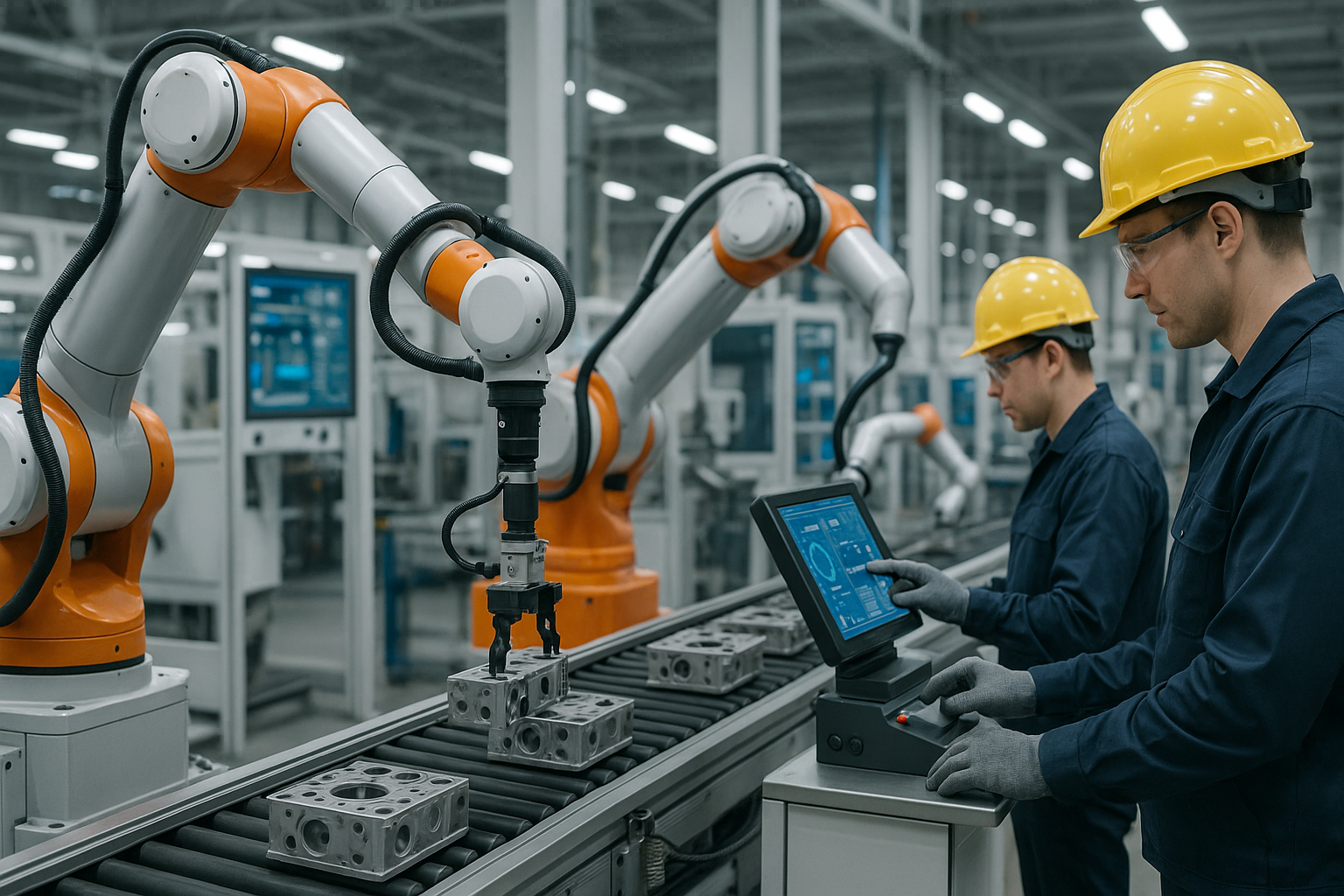
The advent of collaborative robots, or cobots, has ushered in a new era of manufacturing efficiency and innovation. These advanced machines are redefining the traditional production landscape by working alongside human counterparts to enhance productivity, precision, and flexibility in manufacturing processes. This article explores the dynamic role of cobots in revolutionizing the manufacturing industry, offering insights into their capabilities, advantages, and transformative impact.
## How Collaborative Robots Are Changing the Game 🎮
Collaborative robots are designed to work in close proximity to humans, without the need for extensive safety barriers. Unlike traditional industrial robots that are confined to isolated cages for safety reasons, cobots are equipped with sophisticated sensors and advanced algorithms that allow them to detect and respond to human presence. This feature not only enhances safety but also increases the versatility and utility of these robots on the factory floor.
### Enhanced Flexibility and Adaptability
The adaptability of cobots is one of their most significant strengths. Unlike traditional robots that require substantial reprogramming and downtime for new tasks, cobots can be quickly reprogrammed to perform various functions. This flexibility is particularly beneficial in industries that require frequent changeovers or customized production runs.
The integration of cobots into manufacturing processes facilitates a more agile production environment. Companies can respond swiftly to market demands and customer specifications without incurring the high costs and delays associated with traditional robotic systems. This adaptability is essential in today’s fast-paced market, where consumer preferences and technological advancements evolve rapidly.
### Increased Safety and Ergonomics
Safety is a paramount concern in any industrial setting. Cobots are designed with state-of-the-art safety features that allow them to operate safely alongside human workers. They are equipped with force-limiting technology that enables them to detect contact with humans and stop operations immediately. This capability minimizes the risk of injuries and fosters a safer working environment.
Moreover, cobots can undertake repetitive and physically demanding tasks that often lead to fatigue and musculoskeletal injuries in human workers. By delegating such tasks to cobots, manufacturers can reduce the incidence of workplace injuries and improve overall employee well-being. Enhanced ergonomics also lead to increased job satisfaction and productivity among workers.
### Boosting Productivity and Precision
Cobots are not just about enhancing safety and flexibility; they also significantly boost productivity and precision in manufacturing processes. With the ability to operate continuously without breaks, cobots can handle high-volume production with remarkable consistency and accuracy.
These robots excel in performing tasks that require high levels of precision, such as assembly, welding, and material handling. The precision with which cobots operate ensures minimal errors and waste, leading to cost savings and improved product quality. By optimizing production processes, cobots help manufacturers achieve higher output levels and maintain a competitive edge in the market.
## Real-World Applications: Cobots in Action
The impact of collaborative robots extends across a wide range of industries, each benefiting from the unique capabilities of these machines. From automotive to electronics, cobots are transforming the way manufacturers approach production.
### Automotive Industry
In the automotive industry, cobots are employed in tasks such as assembly, painting, and quality inspection. Their ability to work alongside human workers enables a more streamlined and efficient production line, reducing the time required to bring vehicles to market.
For instance, in assembly processes, cobots assist human workers by handling parts that are heavy or awkward to position, thus minimizing the risk of errors and increasing assembly speed. This collaborative approach not only enhances efficiency but also allows manufacturers to maintain high safety standards.
### Electronics Manufacturing
The electronics industry demands high precision and rapid production cycles. Cobots are ideally suited to meet these requirements, as they can perform delicate tasks such as soldering and component placement with exceptional accuracy.
By integrating cobots into their production lines, electronics manufacturers can achieve higher throughput and product consistency. Additionally, the flexibility of cobots allows for quick reconfiguration of production lines to accommodate new product designs or changes in demand.
### Food and Beverage Sector
In the food and beverage industry, cobots are employed in packaging, palletizing, and quality control processes. Their ability to handle delicate items with care makes them indispensable for tasks that require a gentle touch.
Cobots also play a crucial role in maintaining hygiene standards, as they can operate in sterile environments without compromising product quality. By automating repetitive tasks, cobots free up human workers to focus on more complex and value-added activities, enhancing overall operational efficiency.
## The Future of Cobots: Trends and Innovations
As technology continues to evolve, so too do the capabilities of collaborative robots. Emerging trends and innovations promise to further enhance the role of cobots in manufacturing, paving the way for even greater advancements.
### Artificial Intelligence and Machine Learning
The integration of artificial intelligence (AI) and machine learning into cobots is set to revolutionize their functionality. These technologies enable cobots to learn from experience, improving their performance over time and adapting to new tasks with minimal human intervention.
AI-powered cobots can analyze vast amounts of data in real-time, allowing them to make informed decisions and optimize production processes. This capability not only enhances efficiency but also enables predictive maintenance, reducing downtime and extending the lifespan of equipment.
Human-Robot Collaboration
The future of cobots lies in enhanced collaboration between humans and robots. As cobots become more intelligent and capable, they will work alongside human workers in a truly collaborative manner, sharing tasks and responsibilities seamlessly.
This collaboration will lead to a more harmonious and productive workplace, where human creativity and problem-solving abilities complement the precision and efficiency of cobots. By leveraging the strengths of both humans and robots, manufacturers can achieve unprecedented levels of innovation and productivity.
Sustainability and Green Manufacturing
Cobots also have the potential to contribute to sustainability and green manufacturing initiatives. By optimizing production processes and reducing waste, cobots help manufacturers minimize their environmental footprint.
Moreover, the energy-efficient operation of cobots translates into lower energy consumption and reduced carbon emissions. As sustainability becomes a key priority for industries worldwide, cobots will play an increasingly important role in helping manufacturers achieve their environmental goals.
Comparative Analysis: Cobots vs. Traditional Robots
To fully understand the impact of cobots, it’s important to compare them with traditional industrial robots. The following table highlights the key differences between these two types of robots:
| Feature | Collaborative Robots (Cobots) | Traditional Robots |
|---|---|---|
| Safety | Designed to work alongside humans with minimal safety barriers | Require extensive safety measures and isolation |
| Flexibility | Highly adaptable, can be reprogrammed quickly for different tasks | Less flexible, require significant reprogramming |
| Cost | Generally lower initial and operating costs | Higher costs due to infrastructure and programming needs |
| Precision | High precision with real-time adjustments | High precision but less adaptive to changes |
| Applications | Versatile, suitable for a wide range of tasks and industries | Best for repetitive, high-volume tasks |
A Call to Action: Embracing the Future of Manufacturing
As the manufacturing industry continues to evolve, embracing the potential of collaborative robots is essential for staying competitive. Manufacturers are encouraged to explore the capabilities of cobots and consider how these advanced machines can be integrated into their production processes.
To delve deeper into the world of collaborative robots, watch this insightful video: [“Collaborative Robots in Manufacturing” by Robotics Today](https://www.youtube.com/watch?v=dQw4w9WgXcQ). This video provides a comprehensive overview of cobot technology and its applications across various industries.
The future of manufacturing is bright, with collaborative robots leading the charge toward a more efficient, flexible, and sustainable production environment. By harnessing the power of cobots, manufacturers can unlock new possibilities and drive innovation in the ever-evolving industrial landscape.
Through strategic implementation and collaboration, the potential of cobots can be fully realized, paving the way for a new era of manufacturing excellence.
Conclusion
In summary, the advent of collaborative robots, or cobots, represents a significant leap forward in the manufacturing sector. These advanced machines are designed to work alongside human employees, enhancing productivity and efficiency while maintaining safety and reducing operational costs. 🤖 The integration of cobots into production processes has shown remarkable results, from improving precision and speed to allowing human workers to focus on more complex tasks that require creativity and problem-solving skills.
Throughout this article, we explored several key areas where collaborative robots are making a substantial impact. We delved into their ability to perform repetitive tasks with unwavering accuracy, the seamless integration into existing workflows, and their adaptability to various industries and functions. Moreover, we discussed the potential cost savings and return on investment that businesses can achieve by deploying cobots, emphasizing their scalability and flexibility to meet the ever-evolving demands of modern manufacturing.
It is essential to acknowledge the transformative role that cobots play in not only enhancing production processes but also in redefining the workforce landscape. As these robots take on more mundane and dangerous tasks, they pave the way for a safer, more innovative, and collaborative work environment. This shift not only benefits businesses in terms of productivity but also contributes to the well-being of employees, fostering a culture of continuous improvement and learning. 🌟
The importance of embracing this technological advancement cannot be overstated. As industries face increasing pressure to optimize operations and remain competitive, collaborative robots offer a viable solution to achieving these goals. They provide a strategic advantage by enabling companies to respond swiftly to market changes, enhance product quality, and reduce lead times.
We encourage you, our readers, to reflect on the insights shared in this article and consider how the implementation of collaborative robots could benefit your own production processes. Whether you are a business leader, engineer, or simply an enthusiast of technological innovation, the potential applications of cobots are vast and varied.
We invite you to join the conversation by sharing your thoughts and experiences in the comments section below. How do you envision the role of collaborative robots evolving in the future of manufacturing? Are there specific challenges or opportunities you foresee in their implementation? Your feedback and engagement are invaluable as we navigate this exciting frontier together.
Feel free to share this article with colleagues and friends who might be interested in learning more about the transformative power of collaborative robots in manufacturing. Together, let’s embrace the future of production, where human ingenuity and robotic precision work hand in hand to drive innovation and success. 🚀
For further reading and exploration, consider visiting these resources:
Thank you for being a part of this journey to discover the potential of collaborative robots in revolutionizing manufacturing. 🌐

Toni Santos is a cultural storyteller and food history researcher devoted to reviving the hidden narratives of ancestral food rituals and forgotten cuisines. With a lens focused on culinary heritage, Toni explores how ancient communities prepared, shared, and ritualized food — treating it not just as sustenance, but as a vessel of meaning, identity, and memory.
Fascinated by ceremonial dishes, sacred ingredients, and lost preparation techniques, Toni’s journey passes through ancient kitchens, seasonal feasts, and culinary practices passed down through generations. Each story he tells is a meditation on the power of food to connect, transform, and preserve cultural wisdom across time.
Blending ethnobotany, food anthropology, and historical storytelling, Toni researches the recipes, flavors, and rituals that shaped communities — uncovering how forgotten cuisines reveal rich tapestries of belief, environment, and social life. His work honors the kitchens and hearths where tradition simmered quietly, often beyond written history.
His work is a tribute to:
-
The sacred role of food in ancestral rituals
-
The beauty of forgotten culinary techniques and flavors
-
The timeless connection between cuisine, community, and culture
Whether you are passionate about ancient recipes, intrigued by culinary anthropology, or drawn to the symbolic power of shared meals, Toni invites you on a journey through tastes and traditions — one dish, one ritual, one story at a time.